
As we age, we become more susceptible to falls leaving us at an increase risk for serious injuries like fractures and head injuries. Both intrinsic and extrinsic factors play an important role in our balance. Physical therapy can help evaluate, assess, and address these factors to reduce fall risk and improve safety within our everyday lives.
Intrinsic Factors
Our body has three main systems to help us stay in balance including the somatosensory system, the vestibular system, and the visual system. The somatosensory system includes receptors within our joints, muscles, and skin to allow our brain to know where our body is to keep us upright. This system has to work harder when certain co-morbidities such as neuropathy creates decreased sensation in our feet, making our balance a bit harder. Our vestibular system involves our inner ear which allows our brain to interpret where we are in space based on our head position. It can help correct our posture and maintain balance during different activities. The visual system includes our eyes and aids in scanning the environment, depth perception, and keeping our vision clear to avoid falls. However, if one or more of these systems are having difficulty, it can increase our risk for falls.
Extrinsic Factors
There are other factors outside of our bodily control that can contribute to fall risk. For instance, we must think about our environment and how we can optimize it for our safety. Things to consider:
- Adequate lighting in the home and on stairs can aid our visual system especially at night.
- Decreasing clutter around the home mitigates tripping over objects especially those pesky dog toys.
- Throw rugs can pose a threat when they start folding over or fraying and can cause an unnecessary obstacle in the home.
- Accidents that cause slippery floors including kitchen or bathroom spills.
- Icy conditions on our outside steps, driveways, and sidewalks.
Making sure to take our time and use extra support like handrails or our typical assistive devices are important. On the other hand, we must know when certain activities or even outside conditions may be too dangerous for us.
Exercises
Improving both strength and balance can help with reducing risk of falls. Here are some exercises you can consider incorporating into your daily routine:
- Seated Alternating Marches
- Seated Single Leg Extension/Kicks
- Seated Heel Raises & Toe Raises
- Seated Spinal Rotations
- Standing side steps (with a stable surface for balance—like kitchen counter)
- Sit to stands
These are just a few suggestions, however, staying active and mobile (safely) can help facilitate better ease in the day to day.
Physical Therapy
Feeling confident and safe is important. Seeing a physical therapist is not just about recovering from an injury or reducing pain, it is also about preventing them too! If you are feeling a bit unsure on your feet, consider reaching out to Action Potential Physical Therapy at 484-841-6154 to book an appointment!
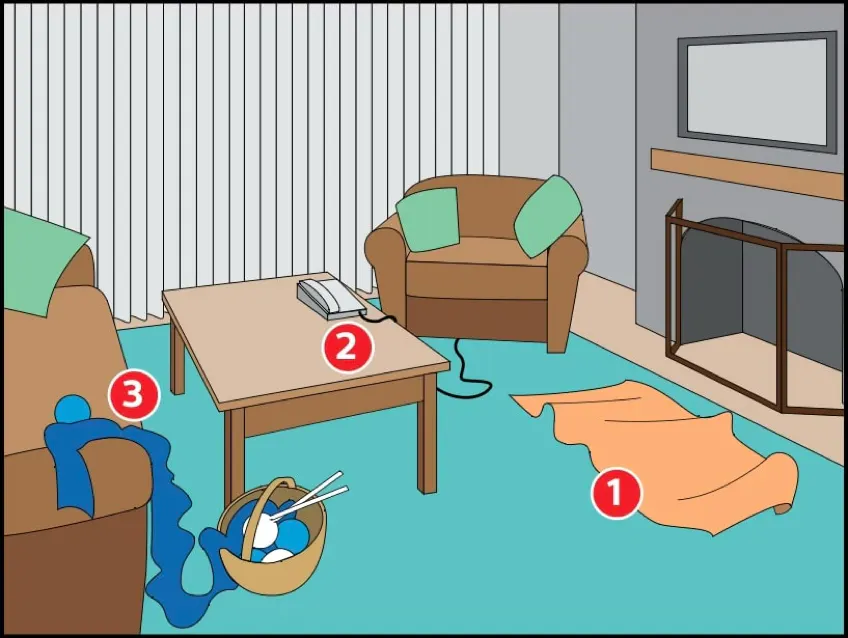
Can you determine what each fall risk is in the picture below? https://www.lifeline.ca/en/resources/reducing-falls-risk-home/

- Throw rug is bunched up which is easy for our feet to get caught in.
- Phone cord is too long causing a tripping hazard
- Sewing supplies are blocking safe path to/from couch