
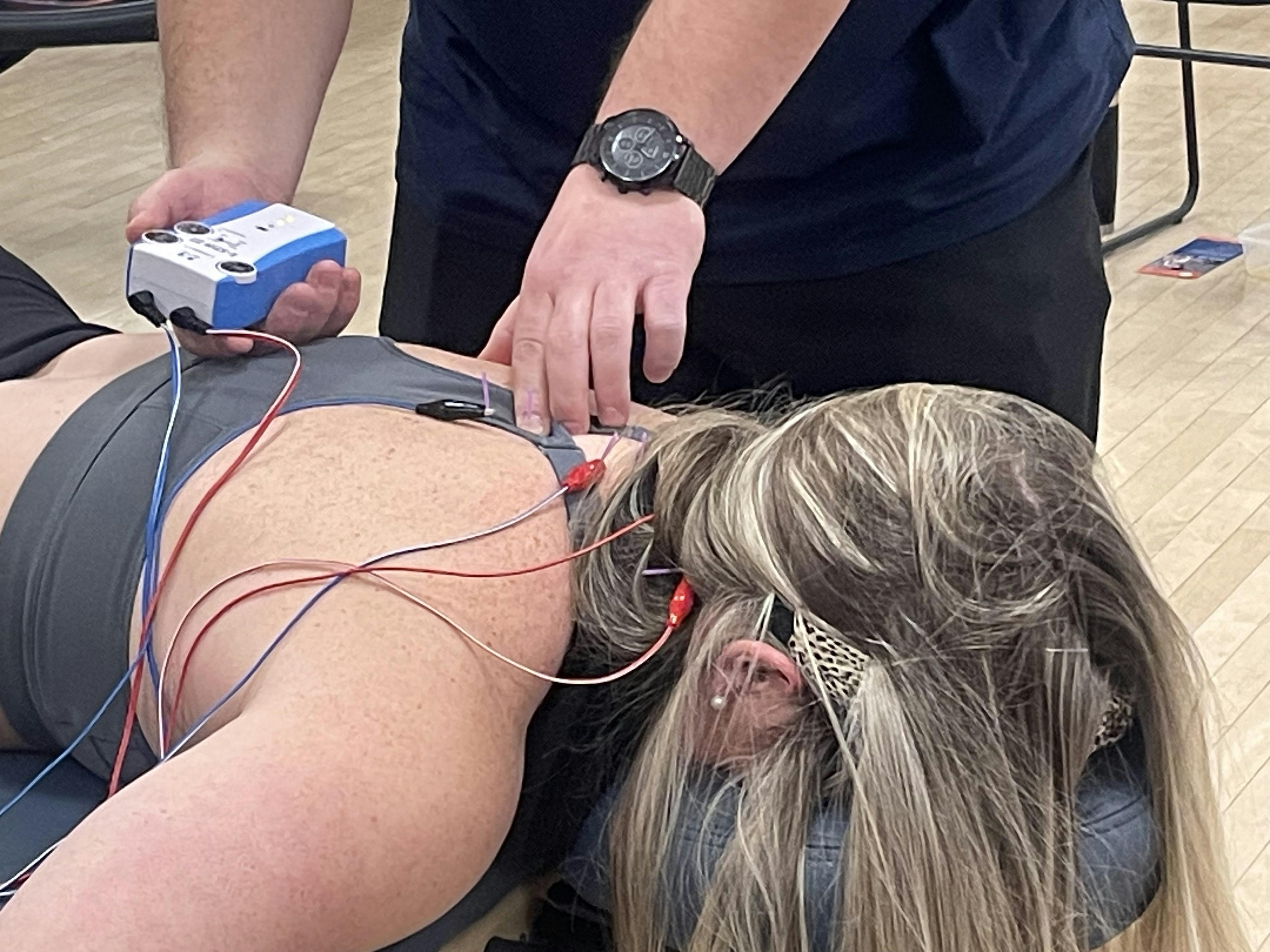
Dry needling is a modern therapeutic technique used by physical therapists and other healthcare professionals to treat muscle pain and movement issues. Despite often being compared to acupuncture, dry needling is rooted in Western medicine and focuses specifically on relieving myofascial pain, the discomfort stemming from tight or knotted muscles known as trigger points.
The tool used is a thin monofilament needle that is placed into the tissue, smaller than a needle that is used for injections. The term, “dry”, comes from the needle not having a lumen (hollow center) and nothing is injected into the tissue. The therapeutic effect comes purely from the mechanical action of the needle.
Treatments include targeting trigger points to invoke a muscle twitch which helps to reset how the nerve communicates with the muscle. Electrical stimulation of needles can help to create an analgesic effect and to help “train” the nerves’ communication with the specific muscle.
These treatments can help to:
- Increase blood flow to the area
- Reduce inflammation
- Decrease pain signals
- Improve muscle flexibility and function
Good candidates to receive this treatment are most people with orthopedic pain. We recommend you come in and have a conversation with one of our Physical Therapists to see if this is a good treatment option for you. Needle aversion can be a barrier to treatment; however, steps can be taken to remediate this. Compared to other common PT treatments such as graston, manual massage, joint mobilizations, and cupping, this tool is being inserted into the muscle belly. All of the treatments above can create soreness, and dry needling is not different in this regard. Soreness and achiness, like an effective workout, can be expected just like any other PT treatment. Acute conditions can respond well following 1-2 sessions, however more chronic conditions can take 3-5 sessions for results.
Conditions that respond well to Dry Needling include:
- Headache/TMJ
- Tennis/Golf Elbow
- Plantar fasciitis
- Low back or neck pain
- TFL/IT Band syndrome
- Achilles tendonitis
Bottom Line:
Dry needling is a safe, evidence-based way to release tight muscles, relieve pain, and help your body move better. Whether you’re dealing with acute, chronic pain or recovering from a workout, it might just be the missing piece in your wellness routine.