
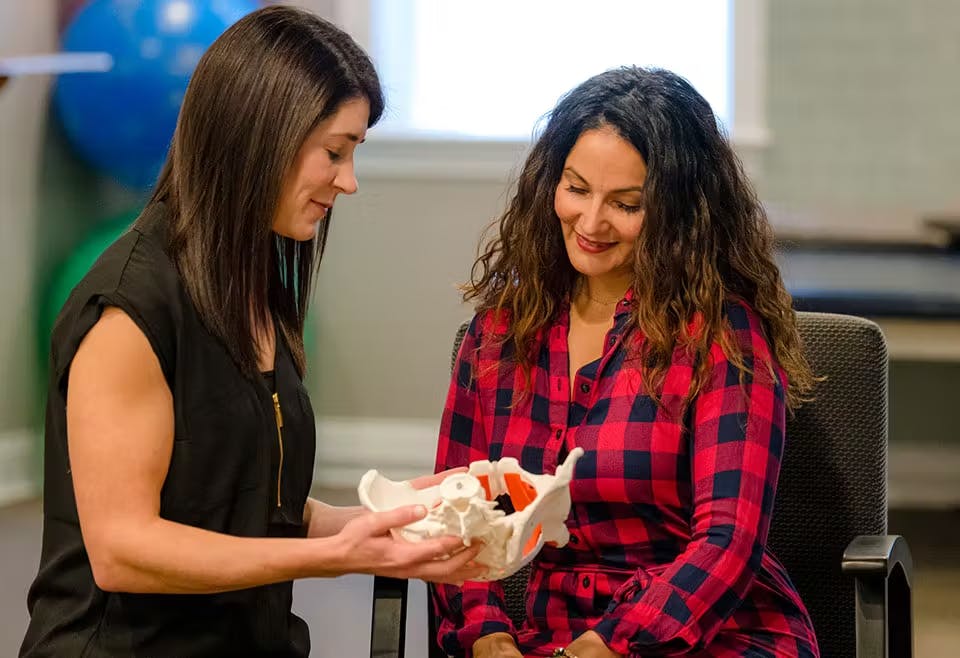
When it comes to women’s health issues and pelvic floor physical therapy (PT), physical therapy can help treat and manage a multitude of pelvic floor conditions, including but not limited to:
- Urinary incontinence
- Endometriosis
- Polycystic ovarian syndrome (PCOS)
- Adenomyosis
- Uterine fibroids
- Vaginismus
- Constipation
- Pre-natal and postpartum conditions
- Prolapse
- Peri-menopause/menopause
These conditions may occur across the lifespan, and pelvic floor physical therapy can help address these issues at various ages and life stages.
Age 20s-30s:
The impact of pelvic floor conditions on the pelvic floor and reproductive systems are often overlooked as these conditions can present itself by impacting fertility, reproductive, and pelvic floor function with increased pain and inflammation in the pelvic floor and abdominal cavity, contributing to painful and irregular cycles, and causing discomfort and pain with sex.
PT can play a role in educating women on managing these conditions with cycle tracking and monitoring, manual work and massage to the abdominal cavity and surrounding structures, internal stretching and pelvic floor releases to help with pelvic pain, and providing support with education on how to manage these conditions including nutrition and diet changes, and providing helpful exercises to minimize and manage the effects of these conditions.
Age 30s-40s:
In the years of childbearing and raising children, pelvic floor PT can continue to help with supporting those who are trying to conceive, those who are currently pregnant, those who are postpartum, and those who may be done with having children. When it comes to fertility support, physical therapy may often be overlooked as an option but it can help with educating women on cycle tracking, monitoring, and management to promote cycle regularity and healthier cycles, and can help play a role in managing some of the conditions linked to fertility issues.
And for those who are expectant mothers and/or new to motherhood, physical therapy can help if you are experiencing musculoskeletal pain, and other issues related to pelvic floor health throughout the course of pregnancy, delivery, and postpartum aftermath, including pelvic floor weakness with incontinence, core instability and weakness with abdominal separation, pelvic pain, and scar tissue management whether from c-section or perineal tearing from deliveries.
Age 40s-50s:
PT can help support women who are approaching menopause by providing support to some of the common symptoms associated with peri-menopause, including: providing appropriate exercises for the changes and shifts in hormones; assisting with vaginal and bladder support and issues urinary and bowel issues including incontinence, frequency, urgency, and constipation; working on providing appropriate tools and support to maintain overall fitness and health; and addressing any pain experienced during sex.
Ages 50s-60s:
As these are the common ages for menopause, pelvic floor PT can support women experiencing menopause with addressing any urinary and bowel problems with constipation, incontinence, leakage, frequency, and feeling of having a general feeling of pelvic floor weakness and dryness due to hormonal issues. PT can also help support those going through menopause with education on nutrition and diet support, especially with the rise in risks for cardiac issues and osteoporosis in those experiencing menopause, and providing appropriate tools and exercises to reduce and manage the side effects of menopause.
Ages 60 and above:
The risk for general deconditioning, weakness, and having a lack of pelvic floor control and function rises due to the hormonal changes and effects of appropriate aging. While issues like having a pelvic floor prolapse may be a concern, so are ongoing issues with urinary and bowel frequency and incontinence. With women in this age group, our focus is to work on general strengthening, promoting balance, and working on conditioning to reduce the effects of aging and deconditioning on the body, reducing risk for falls, and promoting overall health including pelvic floor health and function to maintain and improve quality of life.
And if you are a female belonging to any of these age groups, experiencing any of these issues, and have any of these concerns, please feel free to reach out to us at 484-841-6154. We are here to support you in whatever way we can.