
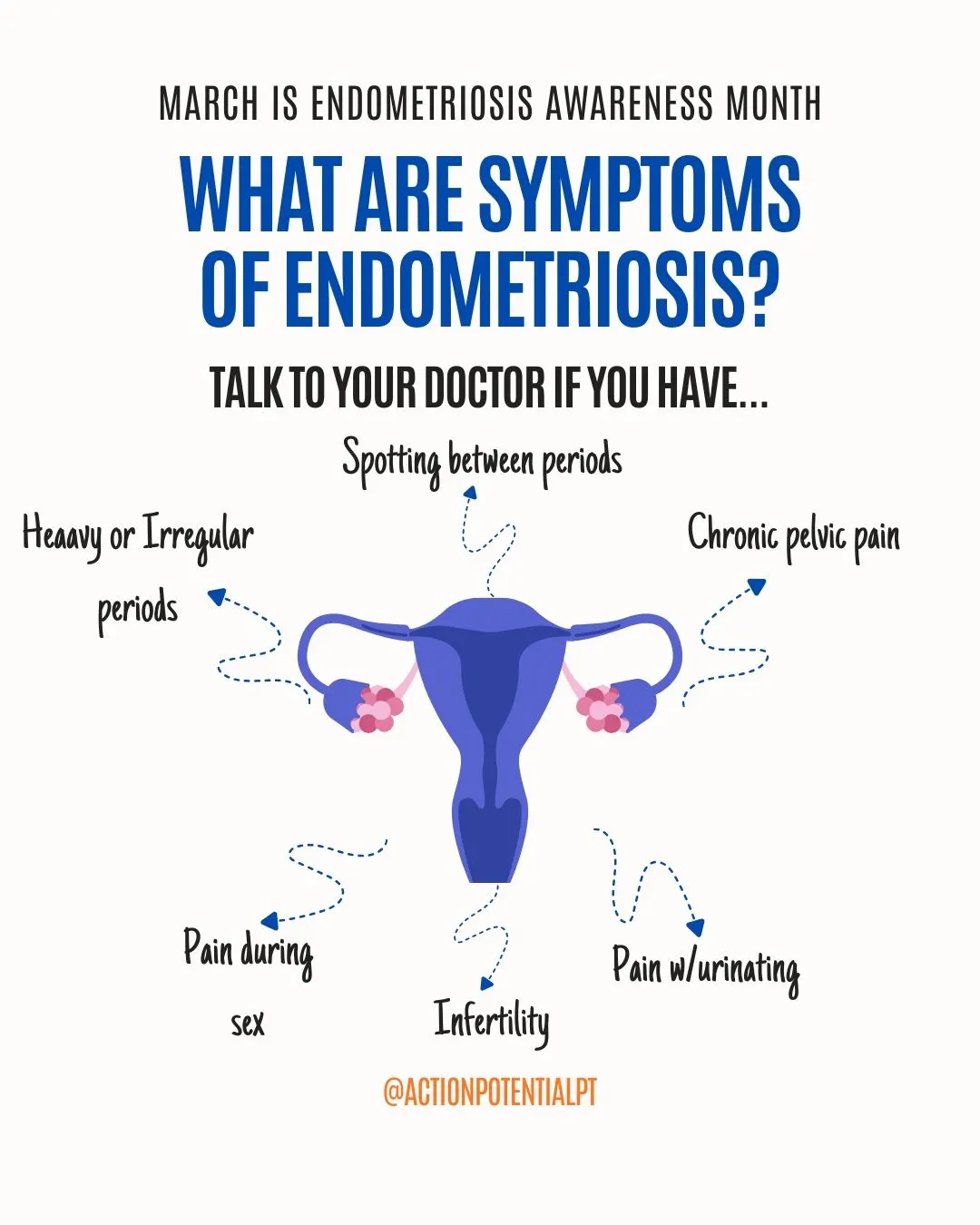
Endometriosis is a chronic painful disease affecting over 10% of women and girls worldwide. March is Endometriosis awareness month and it aims to fight stigma, shorten the average 7–10 year diagnostic delay, and promote research for better treatments. Endometriosis is a condition in which tissue similar to the lining of the uterus grows outside the uterus. This can cause symptoms such as pelvic pain, painful periods, fatigue, and discomfort during daily activities. While medical treatments are important, supportive therapies—like pelvic floor care—can play a valuable role in managing symptoms and improving quality of life.
Understanding the Pelvic Floor
The pelvic floor is a group of muscles and connective tissues that sit at the bottom of the pelvis. These muscles support important organs such as the bladder, uterus, and bowel. They also help control bladder and bowel function, support posture, and contribute to core stability.
For people with endometriosis, the pelvic floor can become tense or overactive due to chronic pain and inflammation. Over time, this tension may worsen pelvic discomfort and contribute to symptoms like pain with movement, bowel issues, or pain during intercourse.
How Pelvic Floor Work Can Help
Working with the pelvic floor—through targeted exercises and therapy—can provide several benefits for people with endometriosis.
1. Reduced Pelvic Pain
Gentle pelvic floor relaxation and strengthening exercises can help reduce muscle tension that develops as a protective response to pain. When these muscles learn to relax and function properly, overall pelvic pain may decrease.
2. Improved Muscle Coordination
Chronic pain can disrupt how pelvic muscles contract and relax. Pelvic floor exercises help restore better coordination between muscles, which can improve daily comfort and movement.
3. Better Bladder and Bowel Function
Many people with endometriosis experience urinary urgency, constipation, or painful bowel movements. A well-functioning pelvic floor supports healthy bladder and bowel control and may ease some of these symptoms.
4. Support for Core Stability
The pelvic floor works together with the abdominal and back muscles to stabilize the core. Strengthening these muscles can help improve posture and reduce strain on the lower back and pelvis.
5. Improved Sexual Comfort
Pelvic floor therapy can help release tight muscles and improve flexibility in the pelvic area. This may reduce pain during intimacy, a common concern for those living with endometriosis.
The Importance of a Gentle Approach
It’s important to note that pelvic floor care for endometriosis often focuses not just on strengthening, but also on relaxation and muscle awareness. Over-tight pelvic muscles can worsen symptoms if exercises are too aggressive.
Working with a trained pelvic floor physical therapist can help ensure exercises are safe, personalized, and effective.
Final Thoughts
Living with endometriosis can be challenging, but supportive strategies like pelvic floor therapy may help reduce symptoms and improve daily life. By focusing on muscle balance, relaxation, and strength, pelvic floor care offers a holistic approach that complements medical treatment.
If you have endometriosis and experience ongoing pelvic pain, consulting a pelvic floor specialist or making an appointment at Action Potential Physical Therapy may be a helpful step toward managing your symptoms and regaining comfort in your body. Give us a call at 484-841-6154.