
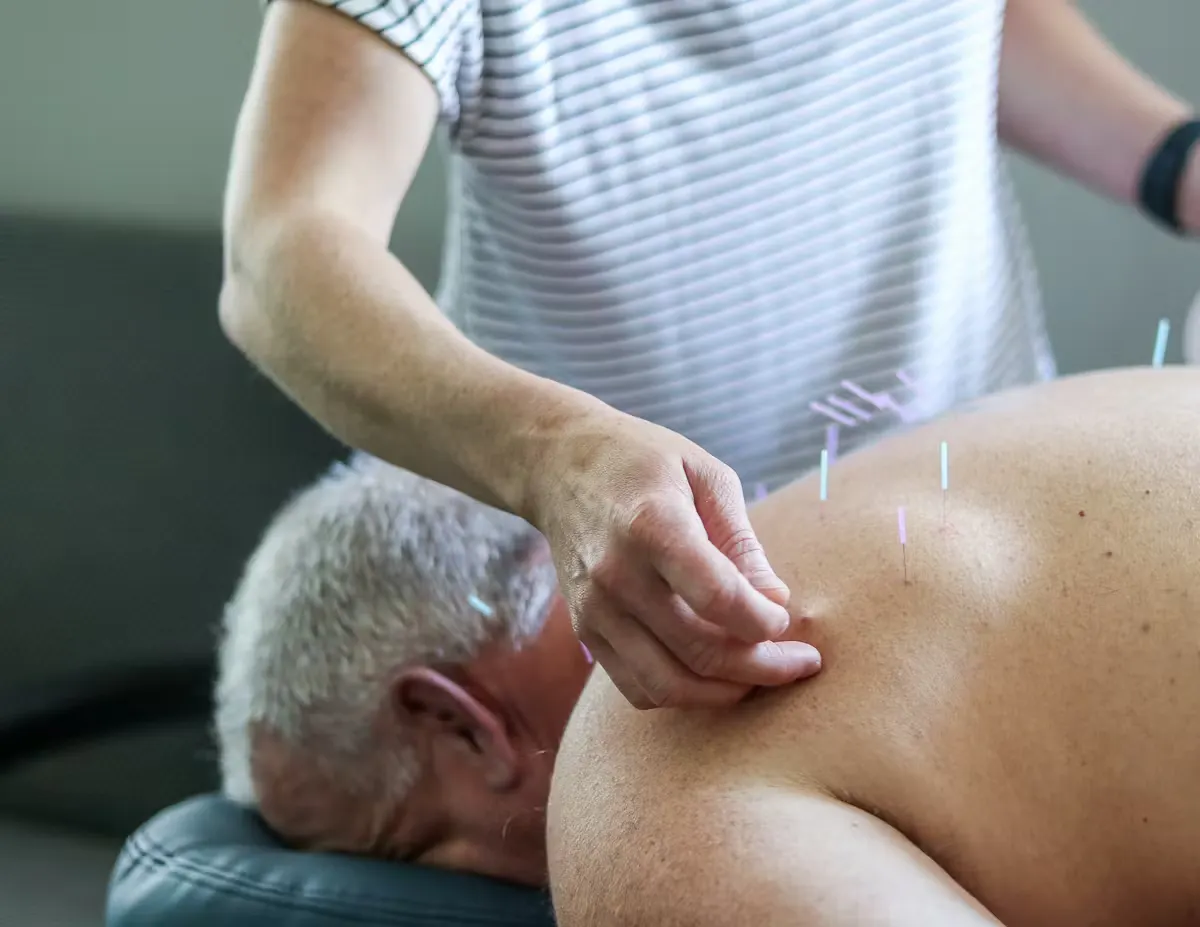
Dry needling isn’t a magic fix—but in the right patient, it can accelerate progress quickly. If you’re not sure what it is, you can read about it in our previous blog post here.
If you’re dealing with persistent pain or tightness that hasn’t responded to typical treatments, here are three strong indicators that dry needling may be a good fit.
1. Your Symptom Feels Deep, Tight, and Doesn’t Change with Stretching
A lot of people assume tightness means they need to stretch more. Not always.
If your symptoms feel:
- Deep and hard to touch
- Like a constant knot or band of tension
- Unchanged or short term relief with stretching or foam rolling
…you might be dealing with a myofascial trigger point or muscular imbalance
Tigger points and imbalances:
- Hyperirritable spots within muscle
- Resistant to surface-level treatments
That’s why stretching gives temporary relief at best.
Where dry needling helps:
It targets those muscle tissues directly. When done correctly, it can create a local twitch response—essentially resetting the muscle’s tone and allowing it to relax more fully than stretching alone.
2. Your Pain Travels or Doesn’t Match Where You Feel It
One of the most overlooked signs: your pain pattern doesn’t make perfect sense.
Examples:
- Pain in the back of the leg, but imaging of the spine is unremarkable
- Shoulder pain that extends down the arm without clear nerve involvement
- Headaches that start in the neck or upper traps
This is often due to referred pain from trigger points.
Common patterns include:
- Gluteal muscles referring down the leg (often mistaken for nerve pain)
- Upper trapezius referring into the head or jaw
- Rotator cuff muscles referring into the lateral arm
If treatment has been focused only on where you feel pain—and not where it’s coming from—it’s easy to miss the source.
Where dry needling helps:
It allows us to treat the actual driver of symptoms, even when it’s located somewhere else. By reducing irritability in the trigger point, the referred pain pattern often decreases as well.
3. You’ve Plateaued with Other Treatments
This is one of the most common scenarios.
You’ve already tried:
- Stretching programs
- Strengthening exercises
- Manual therapy or massage
…and you saw some improvement—but now you’re stuck.
This plateau usually means:
- The muscle is still guarding
- Pain is limiting full engagement in rehab
- There’s a persistent trigger point not being addressed
Where dry needling helps:
It can reduce pain and muscle tone enough to let you actually progress again.
Think of it as:
- Lowering the “volume” on pain
- Improving tolerance to movement
- Allowing strengthening and mobility work to be more effective
It’s not replacing rehab—it’s making rehab work better.
Bonus: What Makes Someone Not a Good Candidate?
Dry needling is most effective for muscle-driven pain.
It’s less helpful when symptoms are primarily:
- Acute inflammatory conditions
- Non-musculoskeletal in nature
- Better explained by structural instability without muscular involvement
A proper evaluation matters—because using dry needling in the wrong situation won’t move the needle (no pun intended).
What to Expect if You’re a Good Candidate
If dry needling is appropriate, most patients experience:
- A brief muscle twitch or cramping sensation during treatment
- Mild soreness for 24–48 hours after
- Gradual reduction in pain and tightness over several sessions
Results are typically best when combined with:
- Targeted strengthening
- Movement retraining
- Load management
Bottom Line
Dry needling works best when:
- Your pain is muscle-driven
- It’s persistent or recurring
- And it hasn’t fully responded to traditional care
If that sounds like your situation, it may be the missing piece that helps you finally move forward.
The next step is a proper assessment to determine if it fits your specific condition—and how to integrate it into a full treatment plan. If interested in taking the next step, book an appointment by calling 484-841-6154 or visit https://reachyours.com/request-appointment/