
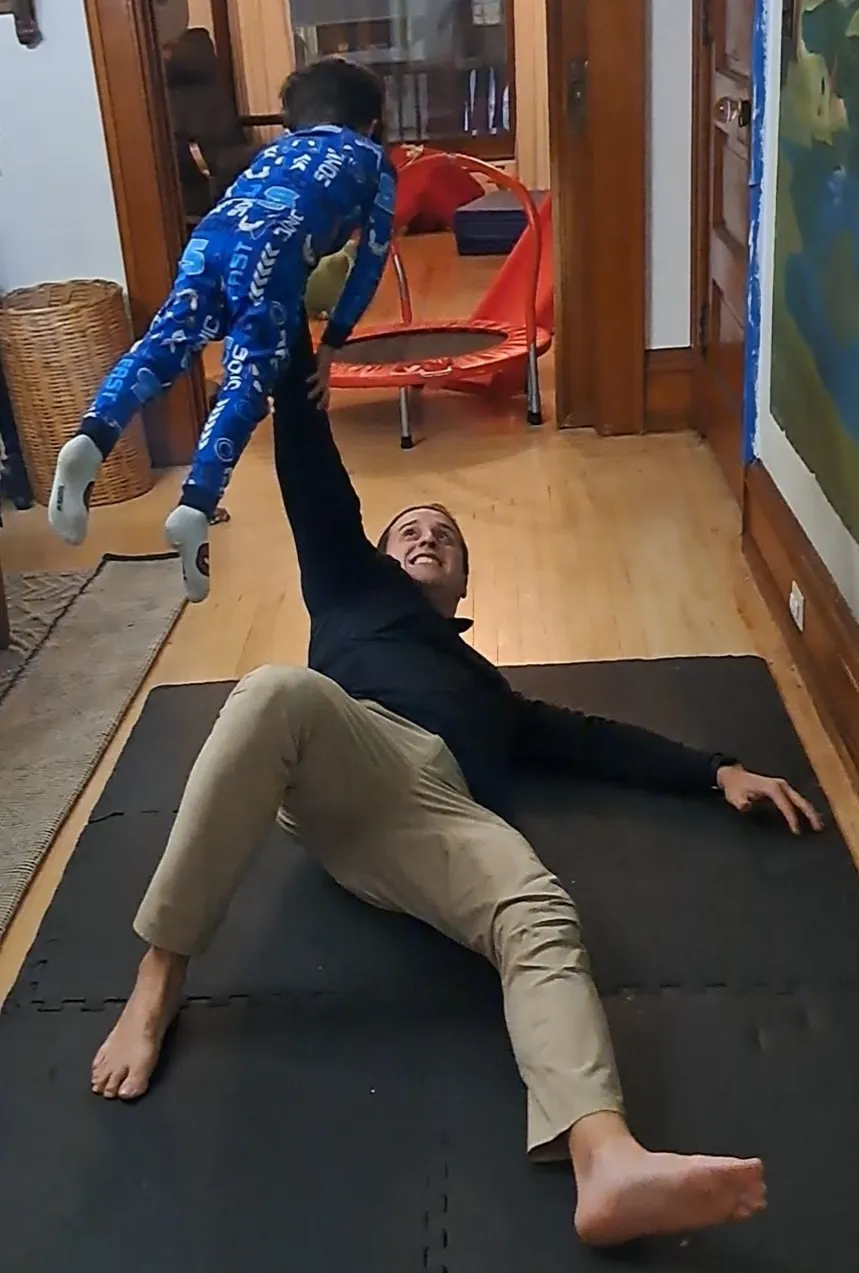
As a PT, one of my main objectives when working with a patient is to help them “stay off of the ground” by minimizing fall risk. Don’t get me wrong, that is still a primary objective, but I think we sometimes forget how much benefit we can gain from being on the ground… and getting back up again. It makes sense. The ground was our bodies first environment of learning and, if you are a parent yourself, you may remember what a big deal it was when your infant made it off of the ground for the first time. Or how about when our body learned to control posture. It wasn’t your PT repeatedly scolding you to get your shoulders back and head tall. It was the first time you rolled from your back to your belly and lifted your head up to see the world. We learned to move on the ground but long forgot those lessons once we had less and less of a reason to be on the floor. Not to mention, the ability to get off of the ground being one of top characteristics of longevity and health span.
10 years ago, I had the wonderful experience of introducing my first child to the world. The secondary benefit was how much more mobile I felt. I cannot thank my exercise routine, diet or sleep habits for this change because all of those got worse with the initial addition of a child into the routine. I realized I was inadvertently practicing what I had been preaching for the previous few years as a PT. I was on the floor daily and frequently. Rolling, prone lying, crawling, kneeling, squatting, sitting cross legged, sitting “side saddle”, long sitting, and then getting up from the floor, sometimes with my daughter in my arms. My body was relearning how to move through the practice of rediscovering the innate postures and positions that taught me how to move in the first few years of life. So while minimizing the risk of unintentionally ending up on the ground is very
important, there are many benefits that we can easily gain from spending more time on the floor and less time in a traditional chair. Here are some of those benefits:
Hip Mobility
- Encourages deep hip flexion (squatting, cross-leg sitting)
- Improves internal & external rotation, often limited by prolonged sitting
- Maintains end-range control, not just passive flexibility
Why it matters: Healthy hips protect the low back and knees and are foundational for walking, lifting, and athletic movement.
Ankle & Foot Mobility
- Positions like squatting or kneeling restore ankle dorsiflexion
- Strengthens intrinsic foot muscles through varied contact with the floor
- Improves toe mobility and load tolerance
Practical payoff: Better balance, gait efficiency, and reduced fall risk.
Knee Range of Motion & Resilience
- Full knee flexion (kneeling, sitting back on heels) maintains joint nutrition
- Trains connective tissue tolerance across the full ROM
- Helps normalize discomfort associated with bending the knee fully
(Gradual exposure matters—comfort first, not forcing range.)
Spine Mobility in Multiple Planes
- Floor work naturally includes:
- Flexion (curling, rolling)
- Extension (prone support, press-ups)
- Rotation & side-bending
- Promotes segmental spinal control instead of rigid posture
Contrast: Chairs encourage static, limited-plane movement.
Transitions = Hidden Mobility Gold
- Getting down to and up from the floor trains:
- Hip-hinge mechanics
- Rotational capacity
- Coordination and joint sequencing
- Strength through range, not just at mid-range
- This is strongly linked to:
- Longevity
- Independence with aging
- Reduced injury risk
Neurological & Proprioceptive Benefits
- More sensory input from hands, feet, knees
- Improves body awareness and motor control
- Reinforces movement confidence in varied positions
Everyday Life Carryover
- People who regularly spend time on the floor tend to have:
- Easier squatting
- Better ability to play with kids or pets
- Less stiffness after inactivity
- Greater movement options under fatigue or stress
Simple Ways to Start (Low Barrier)
- Sit cross-legged or in a 90/90 position for 5–10 minutes/day
- Practice controlled floor ↔ stand transitions
- Add short “movement snacks” (rolling, quadruped, kneeling)
- Make time to “play” on the ground with kids, grandkids or pets
Bottom Line: The floor is a mobility teacher.
- Regular ground time preserves joint range, strength at end-ranges, and movement confidence—things chairs quietly take away over time.
If you are having difficulty with your mobility or range of motion, schedule an appointment with Zach Mitchell or any of our Physical Therapists at 484-841-6154.